Choosing reliable welding plastic system suppliers means assessing the complete joining process: material compatibility, machine selection, tooling, controls, and ongoing support. For South African manufacturers, the strongest investment is equipment that consistently produces acceptable parts and can be maintained over time. M.E.E brings machinery, components, tooling, and support into that conversation.
A plastic component can look perfectly joined and still fail its intended purpose. An enclosure might close neatly but leak. A seam might appear tidy but separate under the load it needs to withstand. Equally, a capable machine can struggle when the part isn’t supported correctly.
That’s why the most useful question to ask a supplier isn’t simply, “Which welder should we buy?”
It’s, “What will it take to make this join work reliably in our production environment?”
The answer tells you far more about the supplier than a glossy specification sheet.
Start with the finished part, then work backwards
Imagine a hypothetical manufacturer assembling a two-piece plastic housing. The purchasing brief asks for a fast welder, but the production requirement is more specific: a secure joint, an acceptable appearance, and enough finished assemblies to meet the daily schedule.
Those are different briefs.
A fast welding cycle won’t solve awkward loading, inconsistent component positioning, or a joint that hasn’t been designed for the selected process. Buying more machine capacity may leave the underlying problem untouched.
Before comparing equipment, write down what a successful finished part must do:
- Hold together under a defined load.
- Meet any specified leak or sealing requirement.
- Maintain important dimensions after joining.
- Avoid unacceptable marks on visible surfaces.
- Protect internal components during assembly.
- Be produced at a realistic rate with manageable rejects.
Not every application needs all these characteristics. The point is to define the ones that matter before discussing machinery.
We offer consultation, design, and manufacturing capabilities to help align solutions with specific production needs. A clear application brief gives that discussion a practical starting point.
Reliable welding plastic system suppliers should ask about your material
“Plastic” is a very broad description. It isn’t enough information to select a joining system.
Ultrasonic welding uses high-frequency mechanical vibration to generate heat in the joining region of suitable thermoplastic parts. Pressure is maintained as the joint solidifies. The result depends on material compatibility, component geometry, tooling, and process settings.
That makes the material specification an early conversation, rather than a detail to sort out after ordering.
Prepare the polymer grade, available material data, and information about fillers or additives. If you’re joining two components, identify both materials. Colour, appearance, or a similar feel won’t establish whether they’re compatible.
Also explain whether the material specification is fixed or still open to change. A supplier has more room to help when the part and material choices haven’t already been locked into expensive tooling.
A useful question to ask: “What information do you need to assess whether this material and joint are suitable for the proposed process?”
A considered answer should acknowledge the application’s limits and any testing needed.
Match the joining method to the application
There’s no single plastic welding method that suits every product. A credible supplier should explain why a process fits your requirements and where another approach deserves consideration.
Ultrasonic equipment for suitable thermoplastic assemblies
Our range includes iSONIC ultrasonic welders, Type ECO 35 and ECO 20 equipment, Type VE 35 and VE 20 actuators, ultrasonic generators, and microprocessor controllers.
These products give us different starting points for discussing ultrasonic joining requirements. The appropriate selection depends on the component, joining task, production arrangement, and required control.
Ask the supplier to explain the proposed combination. A collection of individually capable components still needs to function as a compatible system.
Handheld ultrasonic welding guns
We also supply handheld ultrasonic welding guns.
Where access or the assembly task calls for a handheld approach, discuss how the part will be positioned and supported, and how the operator will achieve consistent results. Where the same operation repeats throughout a shift, compare that approach with a fixture-based arrangement.
Handheld equipment should be chosen for the task it needs to perform, with operator access and working position considered from the outset.
Hot air equipment and HF tooling requirements
Our product offering also includes hot air equipment, while our Toolrules electrode strips serve high-frequency welding die applications.
These belong to different joining approaches. Ultrasonic and high-frequency, or dielectric, welding shouldn’t be treated as interchangeable terms simply because both involve plastics.
Ask which process suits your material and seam requirements before comparing prices. Otherwise, you may end up comparing equipment intended to do fundamentally different jobs.
Give tooling the attention it deserves
The machine usually attracts the attention. The tooling often determines whether the setup works as intended.
In ultrasonic welding, the sonotrode, also called a horn, transfers vibration into the component. The fixture supports and positions the part. Their geometry, together with the joint design, influences the welding result.
If the component moves, sits unevenly, or lacks suitable support, changing the machine settings alone may not resolve the problem.
We design and manufacture aluminium, titanium, and steel sonotrodes to customer requirements, and our offering includes a tool and die department. This allows tooling to form part of the equipment discussion from the beginning.
Before approving a proposal, establish:
- Whether a custom sonotrode or fixture is required.
- Who is responsible for its design and manufacture.
- Which component drawings and tolerances are needed.
- Whether visible surfaces need particular protection.
- What happens if the product design changes.
- How replacement tooling will be specified.
There’s a useful distinction here: a tool that physically fits a component isn’t automatically the right tool for a repeatable joining process.
Ask how the proposed tooling supports the required result.
Agree on proof before agreeing on performance
A neat sample can be encouraging. It doesn’t establish how a process will perform across normal production variation.
When comparing welding plastic system suppliers, ask how suitability and acceptance will be demonstrated. Depending on the application, that may involve representative parts, agreed trials, dimensional checks, strength testing, or leak testing.
The test should reflect the product’s actual job. A visual inspection cannot establish every strength or sealing requirement.
Define what “acceptable” means before reviewing results. For example, a housing might need to meet a specified separation load while keeping its external surface within agreed cosmetic limits.
Also ask whether the evaluation covers the whole operating sequence:
- Loading and locating the component.
- Completing the joining cycle.
- Maintaining any necessary hold or cooling period.
- Unloading the assembly.
- Inspecting the finished part.
A machine’s welding time is only one part of that sequence. Your production schedule depends on the complete cycle.
Compare cost per acceptable part
Purchase price is easy to compare. Long-term production value takes more thought.
A practical starting calculation is: Cost per acceptable part = total relevant production cost ÷ number of accepted parts
Use the same period for both figures, and include the costs relevant to your operation. These might cover labour, tooling, maintenance, scrap, rework, and equipment ownership.
Consider an illustrative example. If two setups each process 1,000 assemblies, but one produces 980 acceptable parts, and the other produces 900, their headline output is identical. Their usable output is very different.
That doesn’t prove that a more expensive machine is always the better investment. It shows why machine price and cycle speed need context.
Request a quotation that makes the scope clear: machinery, controls, tooling, installation requirements, and any agreed services. An attractive price becomes harder to assess when essential items sit outside it.
Check support before you need a repair
For South African manufacturers, a supplier’s local presence creates a practical point of contact. The next step is to establish what support actually includes.
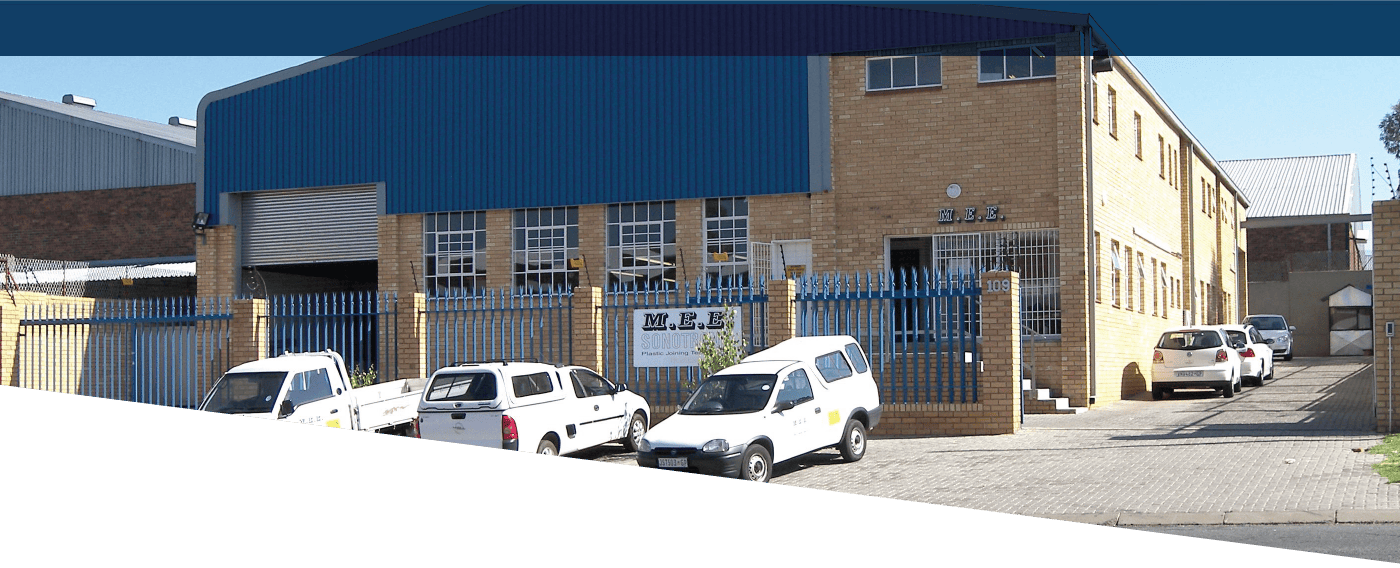
We’re based in Aeroton, Johannesburg, and provide inspections, servicing, repairs, and spare parts support. We also manufacture spares and accessories, including tooling-related items.
Before purchase, ask which services apply to the proposed equipment and how they’ll be arranged. Clarify:
- Where inspections and repairs take place.
- Which spares are stocked and which are ordered.
- Expected lead times for critical components.
- What machine information is needed for fault assessment.
- What routine maintenance the equipment requires.
- Which support, warranty, or service terms form part of the quotation.
Local contactability is valuable, but response times and stock availability should be confirmed for the specific requirement.
An existing machine also deserves assessment before you assume replacement is necessary. Depending on its condition and the application, inspection, repair, or revised tooling may be worth discussing.
Look for relevant technical relationships
Supplier relationships matter when they connect your application with appropriate technology and components.
We act as agents for Sonotronic, Schirmacher, Richardson, and Zinser. These relationships cover specialist plastic joining technologies, welding machinery, industrial power components, and related equipment.
For a buyer, the useful question is how that technical network supports the proposed solution.
Ask who will specify the system, who will supply replacement components, and who will handle technical queries. For an upgrade, establish whether the proposed generator, controller, actuator, or tooling is compatible with the equipment already installed.
A recognised name can support a proposal. It doesn’t replace a clear explanation of how the system will work for your parts.
Prepare a brief that makes supplier comparisons meaningful
The most productive enquiries give suppliers something concrete to assess.
Bring drawings or photographs, representative samples where available, material specifications, expected volumes, and the performance requirements of the finished assembly.
Include practical constraints too: available space, operator access, factory services, and how the joining station fits into the surrounding workflow. Confirm electrical and any compressed-air requirements against the proposed equipment.
If you’re investigating an existing problem, describe it precisely. “The weld is bad” leaves plenty of room for guesswork. “The assembly separates at one corner during our pull test” gives the discussion a direction.
Send the same brief to each supplier. Then compare how clearly each proposal addresses your requirements, identifies uncertainties, and explains the next steps.
FAQs about welding plastic system suppliers
What should welding plastic system suppliers provide?
Look for suitable equipment, compatible components, application guidance, tooling options, and clearly defined support. The required scope depends on whether you’re buying a complete system, upgrading an existing installation, or sourcing a replacement part.
What plastic joining equipment do you offer at M.E.E?
Our range includes ultrasonic welders, actuators, handheld ultrasonic welding guns, generators, microprocessor controllers, sonotrodes, tooling, electrode strips, and hot air equipment. We can discuss which products are relevant to your application.
Can ultrasonic welding join every type of plastic?
No. Material compatibility and component design must be assessed. Ultrasonic welding is used for suitable thermoplastics, but a plastic’s appearance or general description won’t establish whether it can be welded successfully.
Do you manufacture custom sonotrodes?
Yes. We design and manufacture aluminium, titanium, and steel sonotrodes to customer requirements. Discuss the component, equipment compatibility, and joining requirements with us before specifying a replacement or new tool.
Do you provide repairs and spares?
Yes. Our aftermarket offering includes inspections, servicing, repairs, and spare parts support. Contact us with your equipment details and the issue you’re experiencing so we can discuss the applicable service.
What should I send when requesting a quotation?
Provide the material specification, component drawings or photographs, production volumes, required joint performance, and any existing equipment details. Explain your quality concerns and operating constraints so the proposal can address the actual task.
Choose a joining solution with M.E.E
Your next plastic welding investment should begin with the part you need to produce and the standard it must meet.
We bring together plastic joining equipment, custom sonotrodes, tooling, components, services, and spares to help you assess a suitable approach.
Call us on 011 494 3420 or email info@mee.co.za to discuss your application and request a quotation. Bring your drawings, material details, and production requirements, and let’s work through the equipment and support your process needs.